
40 min
Mt Tarawera Helicopter Tour with Guided Crater Walk
Fly over Rotorua's stunning lakes and land on an active volcanic peak for an intimate guided exploration
Reserve
Hand-picked by our editors — only the best 5 experiences from 12 reviewed
Verified partners for every tour, free cancellation where available, and instant confirmation on every booking.
40 min
Fly over Rotorua's stunning lakes and land on an active volcanic peak for an intimate guided exploration
Reserve
40 min
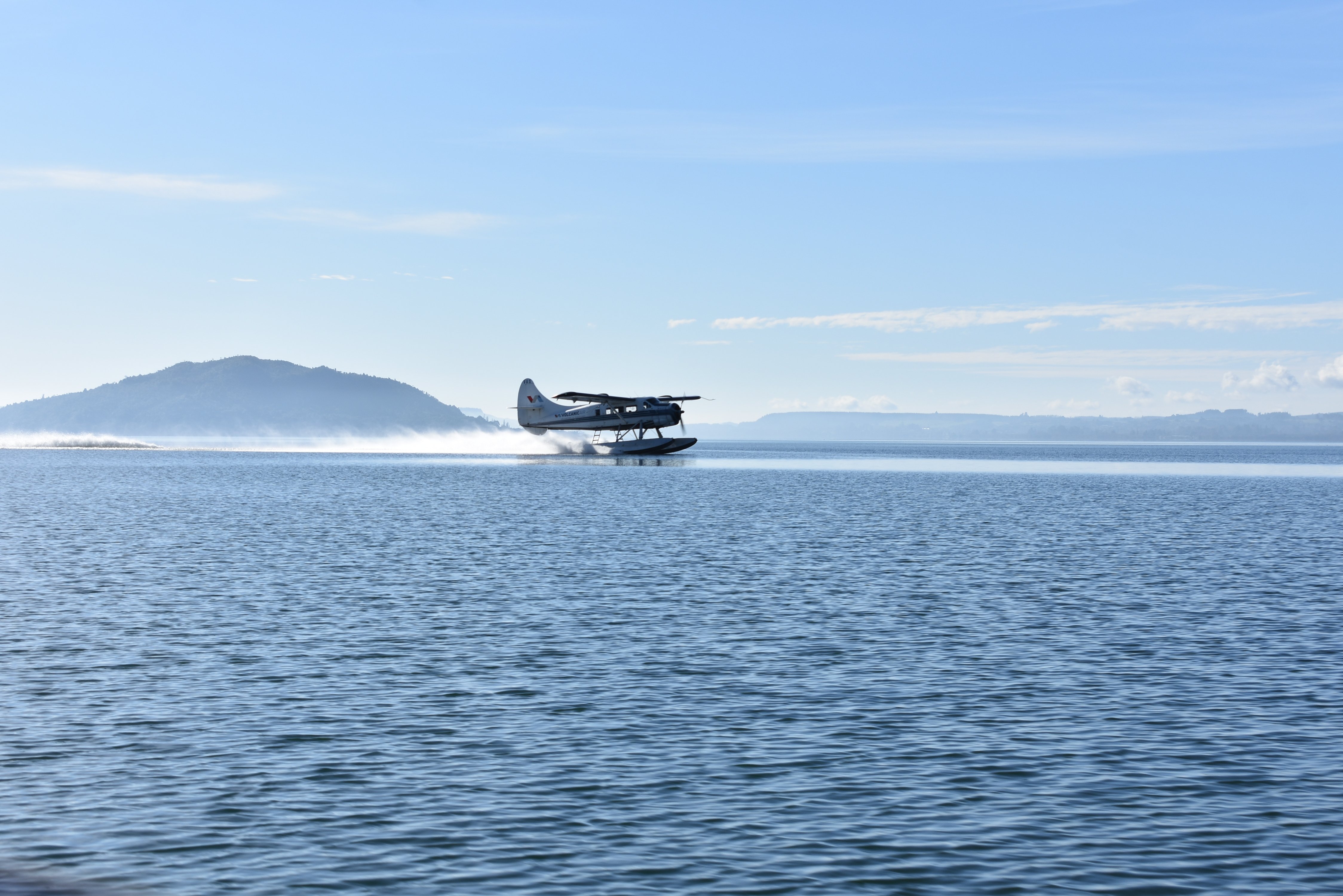
Soar above Rotorua's volcanic landscapes on a floatplane, exploring crater lakes and geothermal wonders
Reserve
4 hr 30 min
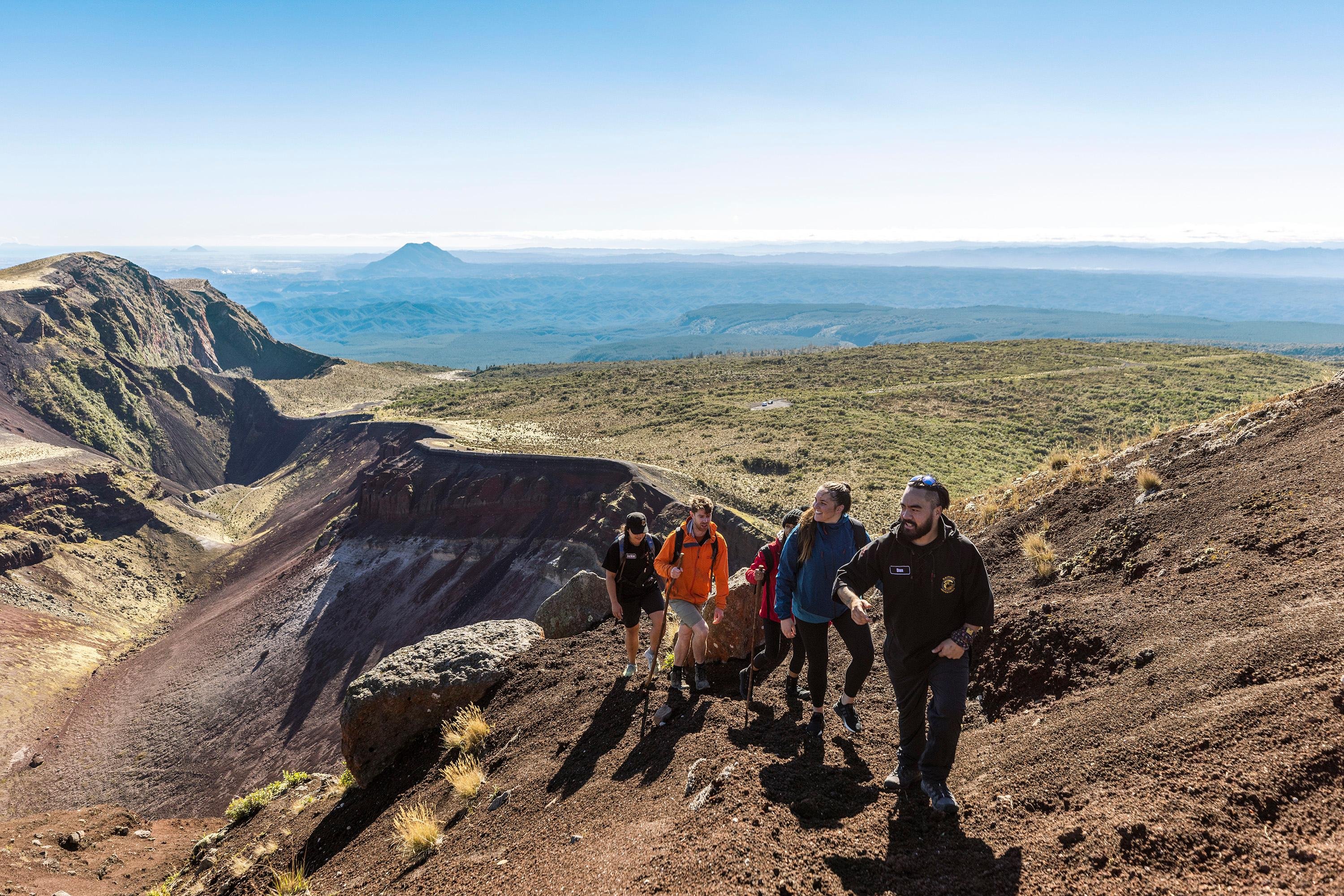
Trek to an active volcanic summit, perform a traditional karakia, and descend into the crater's heart
ReservePrices from verified partners. Availability updates in real time at checkout. Free cancellation policies apply where shown.
The landmarks, rooms, and views travelers on this tour remember — all visible on a single visit.
Experience the high-altitude panoramic views from the peak of this dormant volcano, formed by the 1886 eruption.
Fly along the massive scar left by the 1886 eruption which split the mountain into three distinct peaks.
Observe the twelve distinct crater lakes shimmering below as you approach the mountain.
View the vibrant, steaming cliffs of the world's youngest geothermal valley from the air.
Enjoy an aerial return journey over the towering trees of the famous Whakarewarewa Forest.
The aerial approach offers a swift, high-altitude survey of the landscape, while the land-based trek provides an immersive encounter with the volcanic geology. Most visitors find the mount tarawera helicopter tour superior for photography, whereas the guided walk is preferred for deep learning.
| Feature | Top pick Helicopter Tour | Guided Crater Walk |
|---|---|---|
Method of Travel |
Helicopter | 4WD vehicle and hiking |
Total Time Commitment |
1–2 hours | 4.5 hours |
Physical Exertion Level |
Minimal | Moderate to high |
Depth of Geological Insight |
High-level overview | Detailed historical interpretation |
Accessibility |
High | Requires moderate fitness |
Mount Tarawera helicopter tour tours |
Available | Available |
| See tickets → |
Verdict: Choose the mount tarawera helicopter tour for efficiency and panoramic vistas, or select the guided walk if you seek mount tarawera helicopter tour tickets that prioritize intimate crater access and geological engagement through mount tarawera helicopter tour tour pathways.
Choose your ticket, select your date, and reserve in under two minutes. Secure checkout handled by our verified partner.
Instant confirmation by email, with a mobile voucher you can save offline. No printing, no queuing at a collection desk.
Arrive at the entrance, show your voucher on your phone, and walk in. Most tickets include priority or skip-the-line access.
Practical details for your visit straight from our verified partners — hours, access, rules, and how to get there.
Wear sturdy, comfortable footwear suitable for mountainous terrain. Bring a jacket or additional layers, as temperatures are significantly cooler at the mountain summit.
Bags and backpacks are not permitted on board the aircraft. Passengers must provide individual weights at the time of booking to ensure flight safety and compliance.
Photography is permitted throughout your mount tarawera helicopter tour. Please avoid using flash and tripods during the guided summit walk.
A minimum level of physical fitness and mobility is required for the guided summit walk. This experience is not wheelchair accessible.
Children aged 2 and over require a seat; children under 2 may travel as lap infants. Family-friendly options are available for those wanting to explore the mountain summit.
Food and beverages are generally not included in a standard mount tarawera helicopter tour. We recommend eating before your flight.
Best time to go, insider tips, nearby landmarks, and the cancellation fine print — flip through to skim what matters to you.
Flexible, no hidden fees.
Cancel up to 24 hours before your mount tarawera helicopter tour for a full refund. This policy applies to all mount tarawera helicopter tour tickets.
Mount Tarawera erupted for six hours on June 10, 1886, splitting its summit into a 17-kilometre fissure and burying three Māori villages under ash and mud. The basaltic explosion registered across the North Island, with atmospheric shockwaves recorded in Christchurch 650 kilometres south. What remains is a geological amphitheatre: eleven craters aligned along a northeast-southwest axis, their walls exposing stratified tuff and scoria in rust, charcoal, and ochre bands. The mountain sits within Te Urewera's ancestral lands, its Māori name translating to "burnt peak." Before 1886, the Pink and White Terraces descended its northern slopes—silica formations considered the eighth natural wonder of the world until the eruption entombed them beneath Lake Rotomahana. Today the crater floor remains restricted, accessible only through guided Mount Tarawera helicopter tour operations authorised by Ngāti Rangitihi and conservation authorities. No public roads reach the summit. Aerial routes follow the Tarawera rift system across Waimangu Volcanic Valley, where Frying Pan Lake—the world's largest hot spring—steams at 50 to 60 degrees Celsius year-round. Helicopter descents land at Crater One, elevation 1,111 metres, where gas vents and fumaroles mark ongoing geothermal activity. The crater rim walk traverses obsidian outcrops and pumice fields, with unobstructed views across Lake Tarawera to Mount Edgecumbe and the Kaimai Range. Volcanologists monitor seismic stations embedded in the crater walls; Tarawera remains an active volcano with a recurrence interval estimated at 300 to 500 years. Guided crater walks include interpretation of the eruption sequence, tephra layers, and the 1886 lava dome that solidified in Crater Two. February through April offers the clearest atmospheric conditions, though rotorua volcano flights operate daily when wind speeds remain below 25 knots. The Bay of Plenty's microclimate produces rapid weather shifts; morning departures between 08:15 and 10:00 encounter the most stable visibility windows. Winter snow occasionally dusts the summit above 900 metres, transforming the scoria slopes into a monochrome study of volcanic form.
"The 1886 eruption split Tarawera's summit into a 17-kilometre fissure, burying three villages and entombing the Pink and White Terraces beneath Lake Rotomahana."
A step-by-step walkthrough of the visit — what you'll see, how long each stage takes, and the details that matter.
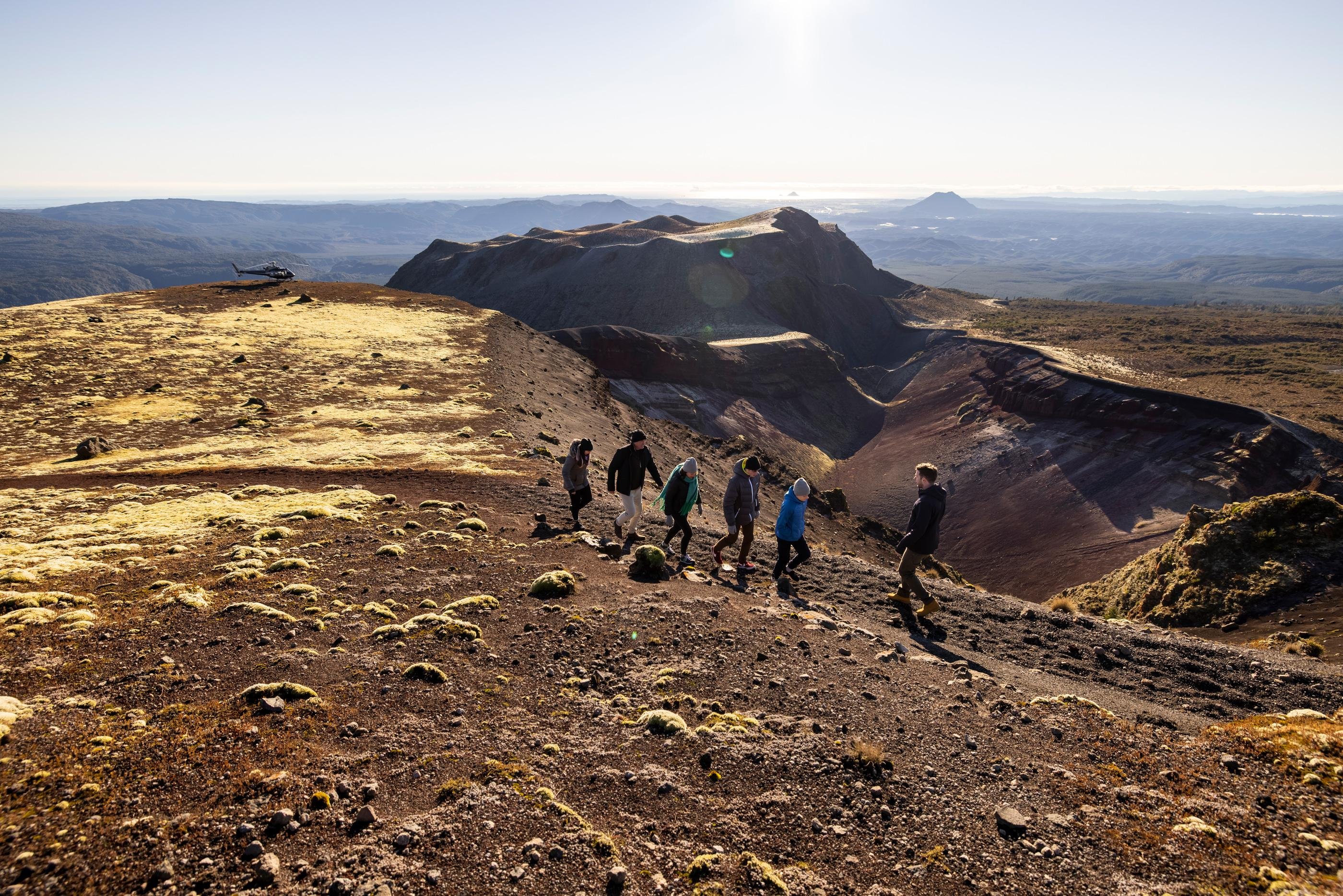
You lift off from Rotorua at 08:30, the helicopter banking east over Lake Rotomahana's turquoise expanse. Below, Waimangu Valley's steam plumes mark Inferno Crater and Frying Pan Lake, their mineral outflows staining the runoff channels yellow and white. The flight path follows the 1886 fissure line, and within six minutes you're circling Tarawera's primary crater—a 250-metre-deep bowl with walls striped in oxidised iron and black tephra. The skids touch down on the crater floor at 1,080 metres elevation. You step onto compacted ash, the air sharp with sulfur from vents hissing 40 metres upslope. Your guide leads you along the northern rim trail, pointing out breadcrust bombs—lava fragments that cooled mid-flight, their surfaces cracked like ceramic glaze. Obsidian shards glint underfoot. To the north, Lake Tarawera stretches 18 kilometres, its far shore backed by the Kaimai Range's forested ridges. You pause at the 1886 lava dome in Crater Two, a solidified plug of andesite that marked the eruption's final phase. The dome's surface has fractured into columnar joints, each hexagonal prism a record of slow cooling. Your guide explains the seismic sensors embedded in the crater wall—data streams monitored in real time by GNS Science. After 40 minutes on the crater floor, you re-board for the return flight, the helicopter descending over the Tarawera River's gorge before touching down in Rotorua at 09:45.
The operating hours for Mount Tarawera tour providers are 08:15–18:00 daily. Please ensure you arrive within the recommended window of 08:15–14:00.
There is 0 NZD standalone entrance fee to the mountain, as access is restricted to authorized guided tours only.
No, independent access is not permitted; you must join an authorized guided operator to visit Mount Tarawera.
We recommend the 08:15–14:00 arrival window for optimal lighting and clearer aerial visibility of the volcanic summit.
Yes, children are welcome on a mount tarawera helicopter tour, with specific policies for infants and child fares.
Bring comfortable, sturdy footwear, a warm jacket, and your mobile device to display your booking voucher.
Due to the rugged volcanic terrain, a mount tarawera helicopter tour is not wheelchair accessible.
You may cancel your mount tarawera helicopter tour tickets up to 24 hours before the departure for a full refund.
Yes, we strongly recommend booking your mount tarawera helicopter tour in advance, especially during the summer peak season.
Yes, you are encouraged to take photos during your mount tarawera helicopter tour to capture the summit views.