
English| EUR
Suggested for you
More currencies
Choose a language
Mount Tarawera's crater walk takes visitors across the raw volcanic landscape created by the 1886 eruption that reshaped the North Island. The site remains an active geothermal area accessible only through authorised guided tours. This page covers what the walk involves, the terrain you'll encounter, and how to prepare for the experience.
Quick answer
The Mt Tarawera crater walk experience involves a guided trek across volcanic terrain formed during the 1886 eruption, covering approximately 4-5 kilometres of uneven ground with elevation changes. Commercial tour operators provide the only legal access to the crater zone, with walks typically lasting 3-4 hours including geological interpretation and safety briefings. The terrain includes loose volcanic scoria, exposed ridgelines, and active steam vents requiring moderate fitness levels.
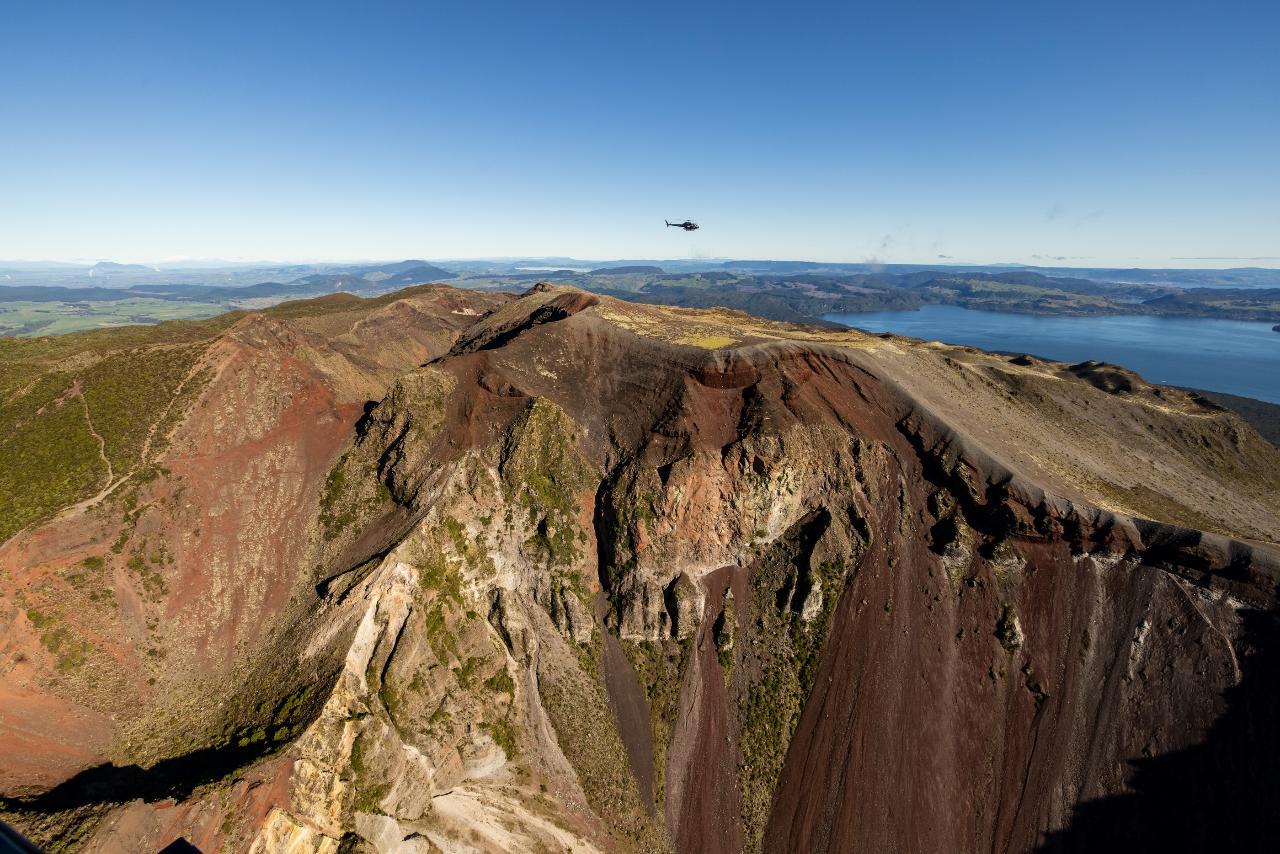
The 1886 eruption of Mount Tarawera created a 17-kilometre fissure that remains one of the Southern Hemisphere's most accessible examples of recent volcanic activity. Walking the crater rim today means traversing the same fractured basalt and rhyolite deposits that buried three Māori villages and reshaped Rotorua's geothermal system overnight. Access to the volcanic crater zone is restricted to commercial guided tours operating under permits from Kaitiaki Adventures, the iwi-owned entity managing the site. The walking experience combines geological education with physical challenge—expect loose volcanic scoria underfoot, exposed sections with drop-offs on both sides, and active fumaroles emitting sulphur-rich steam. Tour guides provide context on the eruption sequence, the buried Pink and White Terraces, and ongoing geothermal monitoring while navigating the safest routes across unstable terrain. The crater walk follows the western flank of the main dome, climbing from the 4WD drop-off point at approximately 850 metres elevation to viewpoints above 1,100 metres. Volcanic ash and pumice create a shifting surface that demands attention with every step. Weather conditions shift rapidly—clear mornings can turn to low cloud within an hour, obscuring the crater floor and reducing visibility to a few metres. Tour operators monitor conditions continuously and adjust routes or cancel departures when wind speeds exceed safe thresholds for exposed ridgeline sections. Physical preparation matters more than most visitors anticipate. The volcanic substrate offers no stable footing, making uphills more taxing and downhills harder on knees than equivalent distances on formed tracks. Layered clothing handles the temperature range between the trailhead and exposed upper sections, while sturdy boots with ankle support reduce the risk of rolling an ankle on loose rock. Water intake needs to increase—the geothermal environment and physical exertion combine to accelerate dehydration even on cool days. The experience rewards those who treat it as a backcountry trek rather than a casual walk, delivering close-range encounters with an active volcanic system few locations worldwide can match.
“The volcanic substrate offers no stable footing, making the crater walk more physically demanding than equivalent distances on formed tracks.”
The best arrival window for your Mount Tarawera crater walk is 08:15–17:00, which provides the clearest weather conditions for optimal volcanic crater visibility and 360-degree views. Planning your visit within this period increases the likelihood of clear atmospheric conditions across the high-altitude terrain.
Warm, 18°C–25°C. Generally stable with high visibility.
Long daylight hours provide extended opportunities for clear mountain views.
Mild, 12°C–20°C. Stable, crisp air conditions.
Cooler temperatures are often accompanied by consistent, clear skies.
Cold, 5°C–14°C. Risk of frost or snow.
Occasional clear, still days offer sharp visibility of the volcanic landscape.
Variable, 10°C–18°C. Frequent wind and cloud shifts.
Weather patterns fluctuate, making early morning arrivals essential for visibility.
Verdict: The best slot for visibility is between 08:15–17:00 during the stable weather months of March to May or September to November.
Access to Mount Tarawera's volcanic craters requires booking through an authorised commercial guided tour operator, as independent access is not permitted. The booking and tour confirmation process typically takes 24-48 hours in advance of your preferred date.
Visit the official Kaitiaki Adventures website at kaitiaki.co.nz or search for licensed operators offering Mt Tarawera crater walks. Verify the operator holds current authorisation, as unlicensed access to the mountain is prohibited.
Choose a date that aligns with your Rotorua itinerary and check operator availability. Tours typically depart in the morning to maximise daylight and weather conditions, so avoid booking for late-afternoon departures.
Provide participant names, contact details, and any medical or mobility considerations the operator needs to know. Many visitors forget to mention recent injuries or fitness concerns, which can affect tour suitability and safety planning.
Review the operator's physical fitness criteria and mandatory equipment list, which usually includes sturdy hiking boots and weather-appropriate layers. Tours may be refused on the day if participants arrive unprepared or unable to meet the physical demands.
The operator will send confirmation with the exact meeting location, departure time, and any last-minute weather advisories. Save these details offline, as mobile reception near the mountain access points can be unreliable.
Mount Tarawera access is available daily throughout the week. Please note that all crater walk experiences must be pre-arranged through authorised commercial guided tours.
Access to the Mt Tarawera crater is restricted to authorised commercial guided tours. There is no independent entry fee for accessing the mountain.
Verdict: Visitors pay 0 NZD for general entry, as costs are determined exclusively by the chosen authorised tour operator.
Mount Tarawera is located in Rotorua 3074, New Zealand. Access to the mountain is restricted to authorized commercial guided tours, meaning private vehicle access is not permitted.
Drive to the designated tour operator meeting point in Rotorua
Use local Rotorua transit services to reach the city center meeting point
Walk to the operator base if staying in central Rotorua
All visitors must coordinate transport with their tour operator, as the mountain is located on private land. Confirm your meeting point via the official site at https://kaitiaki.co.nz prior to your departure.
Mount Tarawera is a sacred volcanic landscape requiring respectful conduct and environmental care. Authorised guided tours operate under strict protocols to protect the crater's cultural and geological significance.
Everything you need to know about mt tarawera crater walk experience
The volcanic site is accessible daily for those participating in authorized guided tours. Please check the official site to plan your visit to this significant geological landmark.
There is 0 NZD entrance fee for the mountain itself, as access is restricted to authorized commercial guided tours. You will only need to account for the costs associated with your chosen tour provider.
The best arrival window is 08:15–17:00 to ensure clearer weather conditions for optimal volcanic crater visibility and 360-degree views. Planning your arrival within this period helps maximize the experience.
No, access to the mountain is strictly managed through authorized commercial operators for safety and cultural reasons. You cannot traverse the lava domes or reach the summit independently.
To arrange your visit, you must funnel through authorized providers found on the official site. These tours handle all necessary permits and transportation to the restricted volcanic area.
You should prepare for variable alpine conditions by bringing sturdy footwear, warm layers, and plenty of water. As this is a high-altitude geothermal environment, sun protection is also recommended even on cooler days.
While many tours welcome families, the intensity of the walk varies by operator. It is recommended to check the fitness requirements of specific guided options to ensure they align with your group's capabilities.